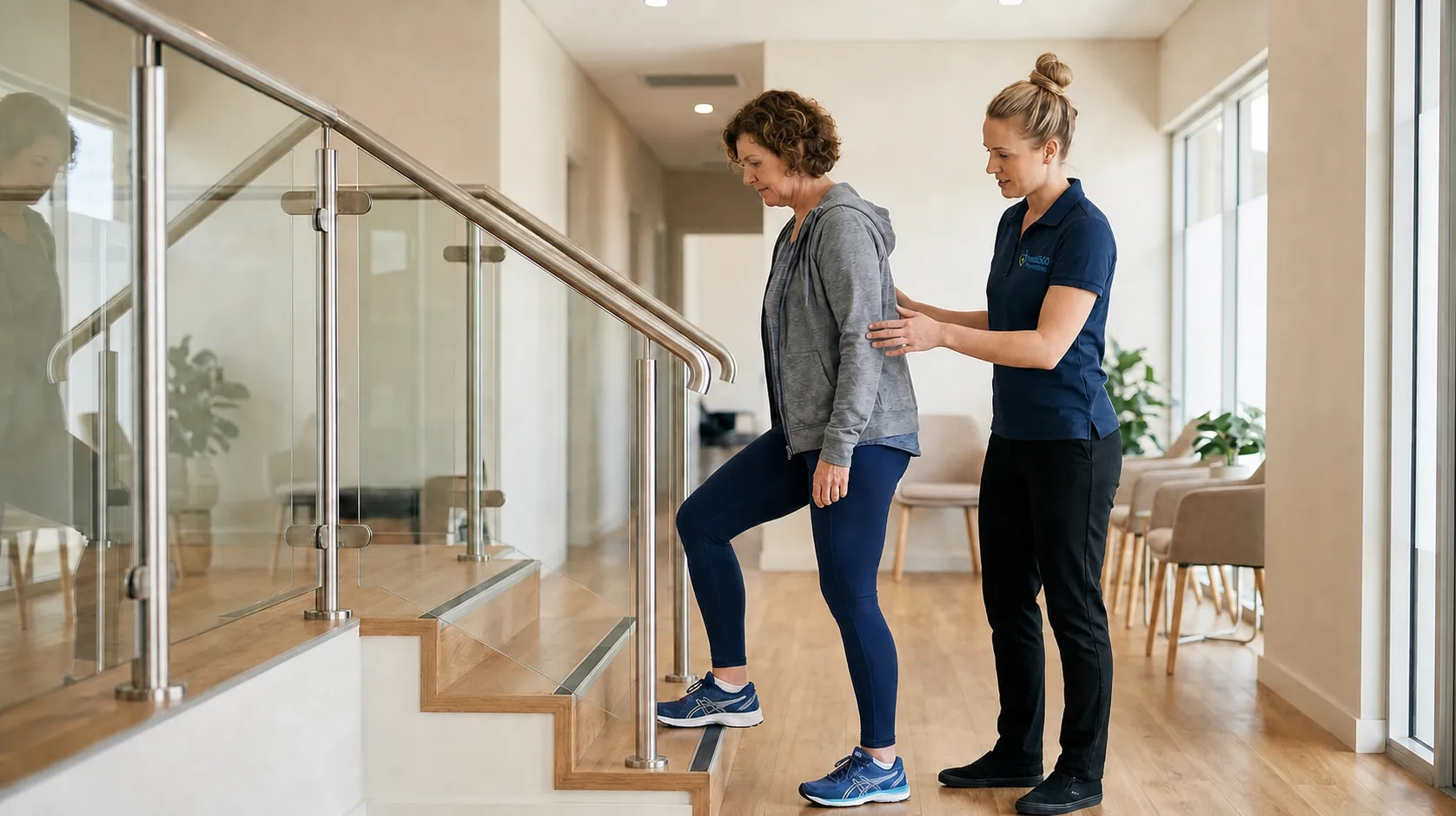
Stairs, sitting, or everyday walking
Knee pain with stairs, squatting, kneeling, prolonged sitting, or reduced confidence when walking.
See elderly rehabilitationKnee & Leg Pain Treatment
Knee or leg pain can change how you move and make you less confident in activities you once did automatically. Physiotherapy can help you assess the problem and rebuild capacity step by step.

When people seek help
These cards group everyday, sporting, and post-procedure situations. They are not a diagnosis.
Knee pain with stairs, squatting, kneeling, prolonged sitting, or reduced confidence when walking.
See elderly rehabilitationSymptoms during walking, running, jumping, or training that keep returning as you try to stay active.
See sports injury rehabilitationRecovery after ACL, meniscus, knee replacement, fracture, or other surgery, following your surgeon’s instructions.
See post-surgery rehabilitationKnee or leg pain can involve different contributing factors. Pain on stairs, walking, or sport does not always identify one particular cause.
That is why we start with assessment rather than a generic exercise sheet. Your physiotherapist considers how the symptoms began, what aggravates or eases them, and the walking, stair, work, or sport demands that matter to you.
How physiotherapy may help
Your goal might be walking without guarding, taking stairs more confidently, returning to running, or getting through a workday on your feet. The plan is shaped around those tasks, not a generic protocol.
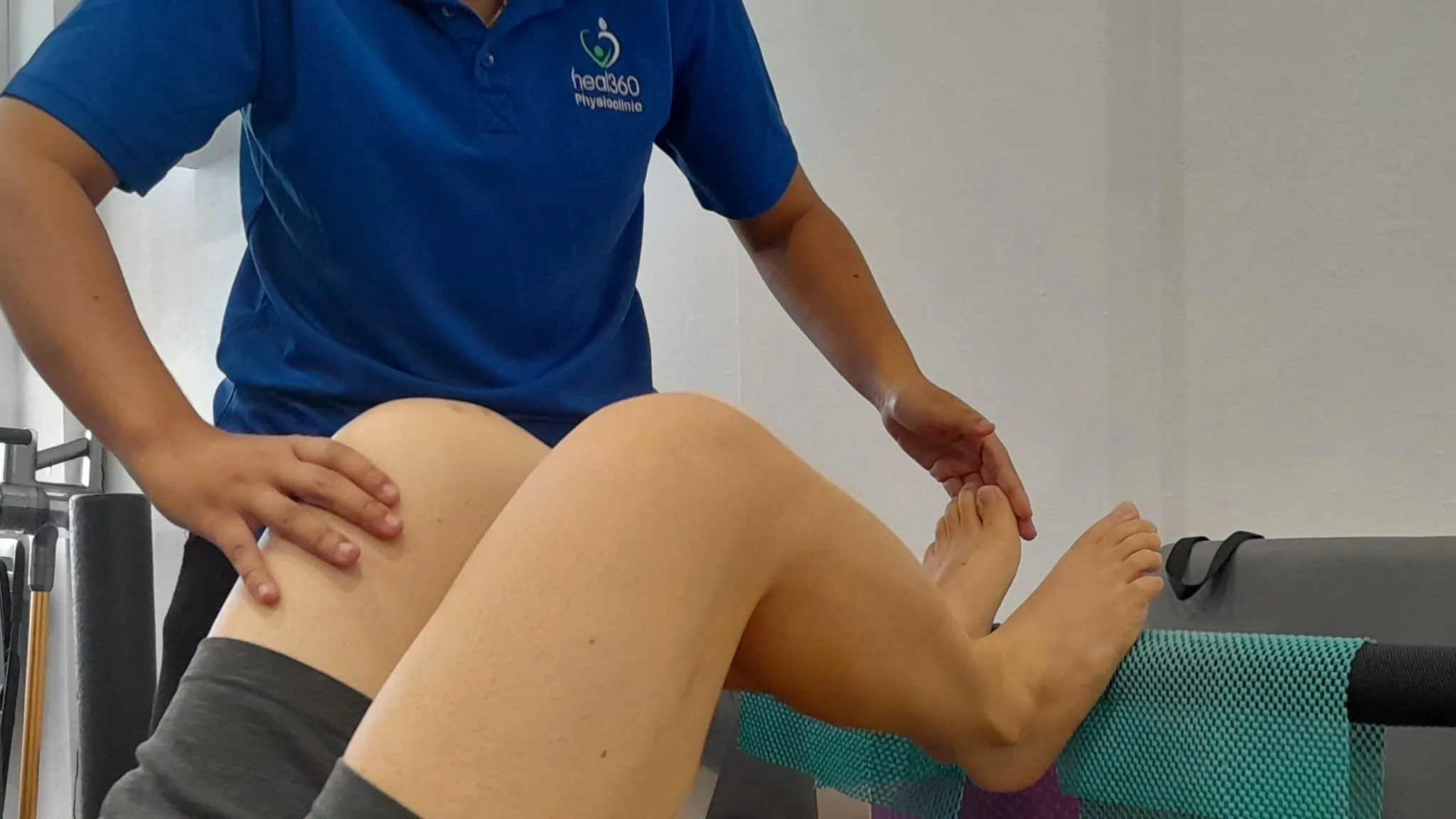
Knee arthritis
Exercise and strength work can support function and confidence for many people with knee arthritis, but the plan should reflect symptoms, health, and goals.
Physiotherapy does not “erase” arthritis; it can help you manage its impact and maintain activity. See the arthritis page if joint changes are the main story.
A physiotherapist will assess you, explain what they find, and shape a plan around walking, stairs, sport, or work that knee or leg pain is interrupting.
B.App.Sc (Physiotherapy), University of Sydney
Michelle has worked in both public and private care settings in Singapore, including Changi General Hospital and Singapore Armed Forces physiotherapy centres.
Locations: Tanjong Pagar, East Coast
Michelle, 1 of 3
“Therapist Ann has help me to improve the function of my knee pre and post-surgery. Her attentive care and the treatment programme has helped to relieve pain and anxiety. My therapist Ann often reassured me that with proper physiotherapy and exercises I will recover from my knee injury. I am often encouraged by her. Ann is a dedicated, caring therapist, attentive and has excellent care towards her patient. I am very happy to be under her care.”
Kate Hia, Communication Manager, 1 of 6
If surgery, sport, or later-life mobility is a large part of the picture, these pathways give more specific context. This page already covers physiotherapy for knee and leg pain.
Choose this pathway when you are recovering after ACL, meniscus, replacement, fracture, or other knee and leg surgery.
Explore post-surgery rehabilitationChoose this pathway when running, jumping, or sport-specific loading is the goal you want back.
Explore sports injury rehabilitationChoose this pathway when walking, stairs, or independence in later life is the main need.
Explore elderly rehabilitationThese pages cover other common concerns. They are navigation links, not a list of conditions that usually occur together.
Joint stiffness and everyday mobility when arthritis is part of the picture.
Explore arthritis carePain, sprain, or stiffness that changes how you take the next step.
Explore foot and ankle careThe right activity level depends on your symptoms and condition. An assessment can help identify what to modify, what to continue, and how to progress safely.
Physiotherapy may assess strength, load, movement, training changes, and other relevant factors, then build a gradual return plan when appropriate.
Major trauma, inability to bear weight, obvious deformity, a hot swollen joint with illness, or severe and rapidly worsening symptoms require prompt medical review.
heal360 Physioclinic is at Tanjong Pagar and East Coast. Both clinics are by appointment only. Book online, or ask which location is more convenient.
Email info@physioclinic.sg if you are unsure which appointment to book.
Book a knee and leg assessment at Tanjong Pagar or East Coast, or ask the clinic which appointment is most suitable.