
Skip to content

Treatments & Rehab

Still dealing with pain, stiffness, or weakness after surgery?

Whether you had surgery recently or it has been months—even years—rehabilitation can still help you work towards better movement, strength, and confidence. The pace follows your procedure, precautions, and personal goals.

By appointment only. Bring any surgeon instructions or reports you have.

Pain, stiffness, or weakness that has not settled

Surgery is one step. Rehabilitation is the next. It is common to feel unsure how much to move, what discomfort is expected, or whether you should already be further along.

A physiotherapist can assess where you are now, work within your surgeon’s instructions, and plan progressive rehabilitation around the activities you need to regain. That can still be useful months or years after the operation.

Rehabilitation for a range of procedures

  • Knee — ACL reconstruction, meniscus surgery, and knee replacement
  • Shoulder — rotator cuff repair and shoulder stabilisation
  • Back and spine — discectomy, decompression, and fusion
  • Hip — labral repair, hip replacement, and arthroscopy
  • Ankle and foot — ligament repair, Achilles repair, and fixation
  • Fractures and tendon repairs — after immobilisation or surgery

How we pace your recovery after surgery

  1. 1

    Assess and plan

    We review your surgery, surgeon’s instructions, current symptoms, and the activities you need to regain, then agree a staged plan.

  2. 2

    Protect and restore movement

    Early work focuses on swelling, comfort, and gentle movement that protects healing tissues without leaving you unnecessarily stiff.

  3. 3

    Rebuild strength and daily function

    As you progress, the plan builds strength, balance, and the tasks that matter—walking, work, caregiving, exercise, or sport.

During the appointment we may look at

  • Range of movement within your surgeon’s precautions
  • Strength, swelling, and walking quality
  • The stairs, transfers, or work tasks you need next

What we may work on after surgery

Your programme may focus on swelling and comfort, joint movement, strength, walking, balance, and a gradual return to work, exercise, or sport. Timing follows healing and your surgeon’s instructions.

Help us understand your procedure

Bring any discharge summary, referral, operative note, imaging report, rehabilitation protocol, brace instructions, and list of current precautions that you have. If you are unsure what is relevant, contact the clinic before your appointment.

Rehabilitation should connect clinical milestones with real goals: getting out of a chair, walking more confidently, returning to work, caring for family, or resuming sport.

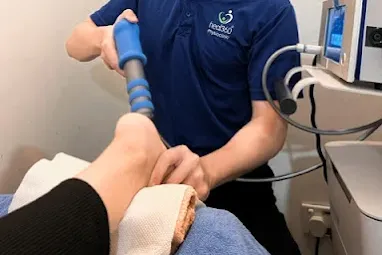
Physiotherapist using a treatment device around a patient's knee.
If walking in the clinic looks acceptable but stairs at home still feel uncertain, the plan has to include those stairs—not only the exercises that went well today.

Physiotherapist at heal360 Physioclinic

Post-surgery rehabilitation with an experienced physiotherapy team

A physiotherapist will assess you, follow your surgeon’s instructions, and shape a plan around the walking, work, or daily tasks you need to rebuild.

Michelle

  • Principal Physiotherapist

B.App.Sc (Physiotherapy), University of Sydney

Michelle has worked in both public and private care settings in Singapore, including Changi General Hospital and Singapore Armed Forces physiotherapy centres.

  • Chronic pain and movement confidence
  • Musculoskeletal conditions such as neck, back, shoulder, and knee symptoms

Locations: Tanjong Pagar, East Coast

Michelle, 1 of 4

“Had an arm surgery last Dec which caused my right arm movement to be limited. Been going for weekly Physio session with Janette since Feb and Pilates... session with Jingwen since Jun. Both of them are very professional and friendly. Have seen huge improvement in my arm range movement now. Would highly recommend!”
Lily my · Google review, Aug 2023

Lily my, 1 of 6

Two clinics in Singapore

heal360 Physioclinic is at Tanjong Pagar and East Coast. Both clinics are by appointment only. Book online, or ask which location is more convenient.

Email info@physioclinic.sg if you are unsure which appointment to book.

Questions people often ask

Do I need my surgeon’s referral?

Requirements vary. Even when a formal referral is not required, your surgical information and post-operative instructions are valuable. Check with your surgeon, insurer, or the clinic if you are unsure.

When should rehabilitation begin?

The right time depends on your procedure and surgeon’s instructions. Some rehabilitation begins soon after surgery, while other movements or loads must wait. If you already have a protocol, bring it. If you have not received clear guidance, contact your surgeon or the clinic before progressing on your own.

Is some pain normal during rehabilitation?

Some discomfort can occur as movement and load are reintroduced, but your response should be assessed in context. Tell your physiotherapist what you feel during and after activity. Seek medical advice promptly for unexpected, severe, or worsening symptoms.

How long will rehabilitation take?

There is no single timeline. The procedure, healing, prior health, goals, consistency, and any complications all matter. Your physiotherapist will discuss staged goals and review them with you.

Can you work with my surgeon’s protocol?

Yes. Bring the protocol or instructions you received. With your consent, the clinic may clarify relevant requirements with your healthcare team where appropriate.

What should I bring?

Bring any discharge summary, referral, operative note, imaging report, rehabilitation protocol, brace instructions, and list of current precautions that you have. If you are unsure what is relevant, contact the clinic before your appointment.

Know what to work on next

Book a post-surgery assessment and bring the instructions or reports you have. We will help you understand the next appropriate stage of rehabilitation.